Team project / Composite engineering
MORE Cargobike Hull
Engineering and building the mold for a fibreglass-epoxy cargobike body, from organic surface CAD to a modular, 3D-printed negative mold, with zero prior composite experience going in.
Engineering and building the mold for a fibreglass-epoxy cargobike body, from organic surface CAD to a modular, 3D-printed negative mold, with zero prior composite experience going in.
Overview
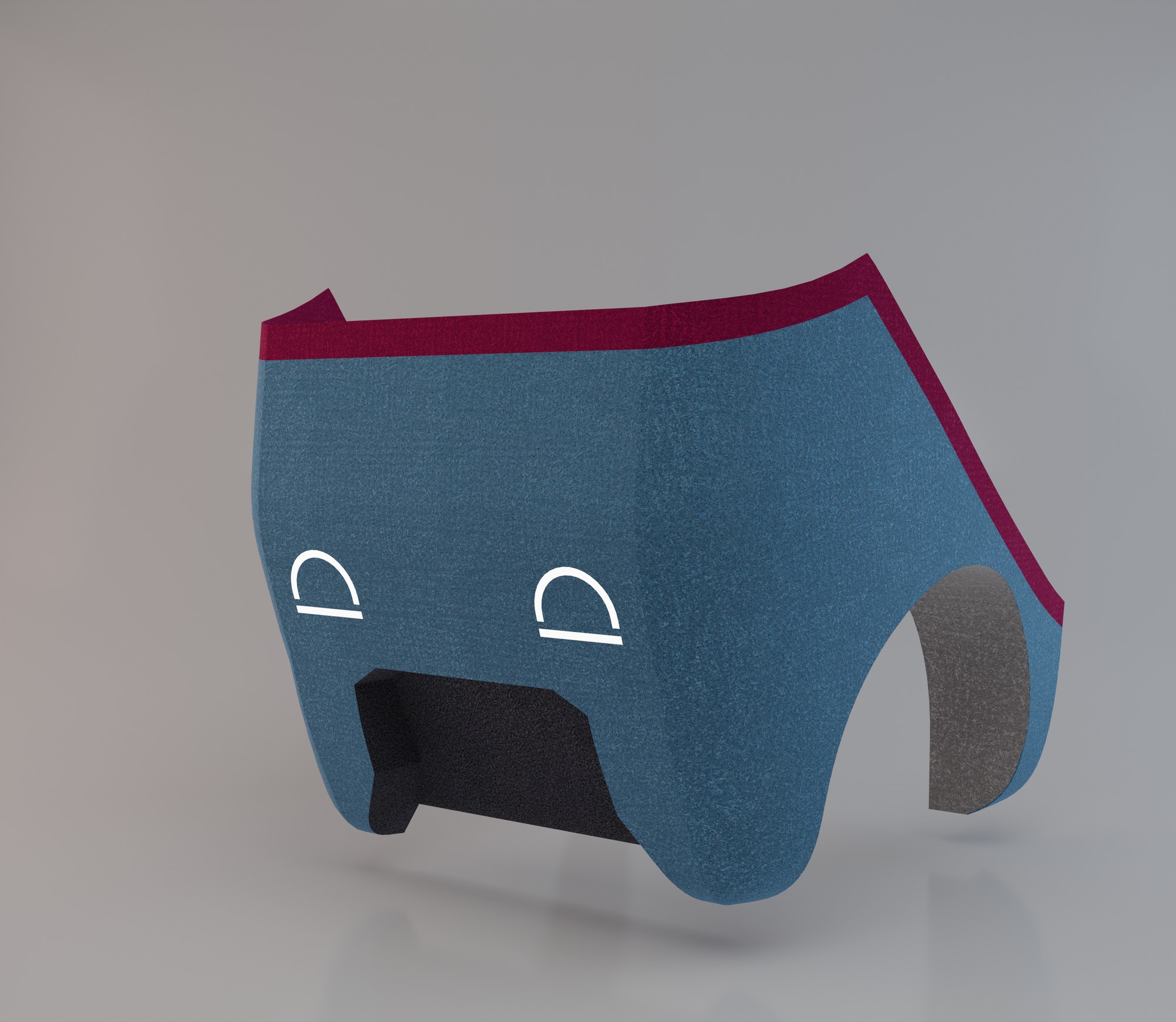
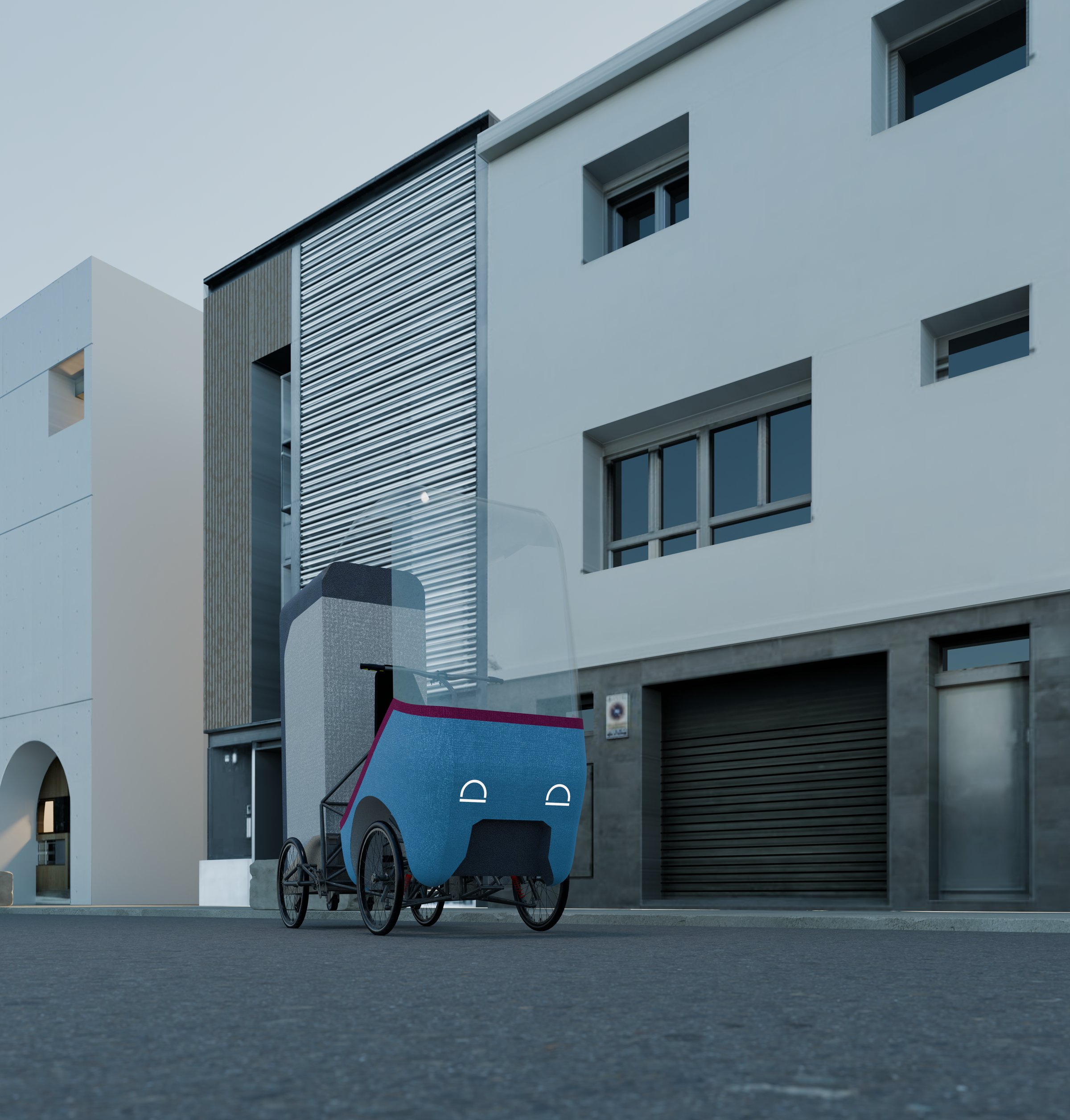
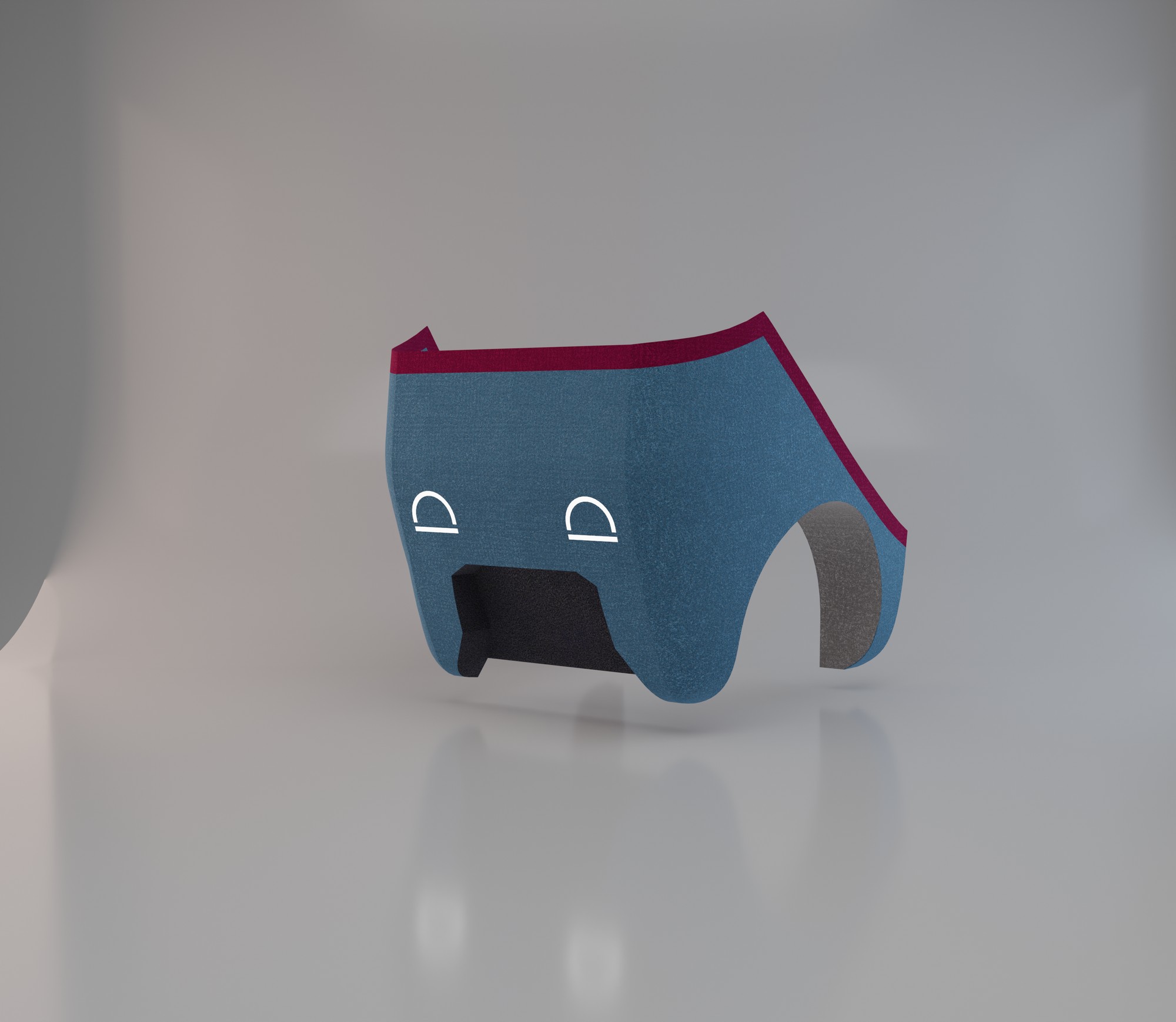
MORE Cargobike is a full redesign of an electric cargobike, built by a multidisciplinary student team to be lighter, stronger and genuinely production-ready rather than a set of small tweaks to the previous version. My individual contribution was the hull: designing and producing the mold for the composite body that wraps around the frame, everything needed to make it actually manufacturable.
The brief from the client was narrow but strict, total ready-to-ride weight under 75 kg. That left roughly 11 kg for the hull, and the plexiglass window alone already accounts for 4 to 5 kg of that. A standard CNC-milled foam mold at this size normally runs a company €6,000 to €10,000, nowhere near a student project's budget, so a large part of my job was finding a production method that could hit the same accuracy for a fraction of the cost. The mold itself is complete and was handed over well received; full lamination of the hull is being finished later this year by the project's senior engineers.
Chasing every gram out of that weight budget is material honesty applied to engineering: use exactly what the structure needs to carry its load, nothing more, because a lighter bike is also a more sustainable one to ride and build.
Finding a cheaper production method happened through physical test pours and failed attempts, not a spreadsheet, hands-first problem solving on a manufacturing question nobody on the team had answered before.
Context
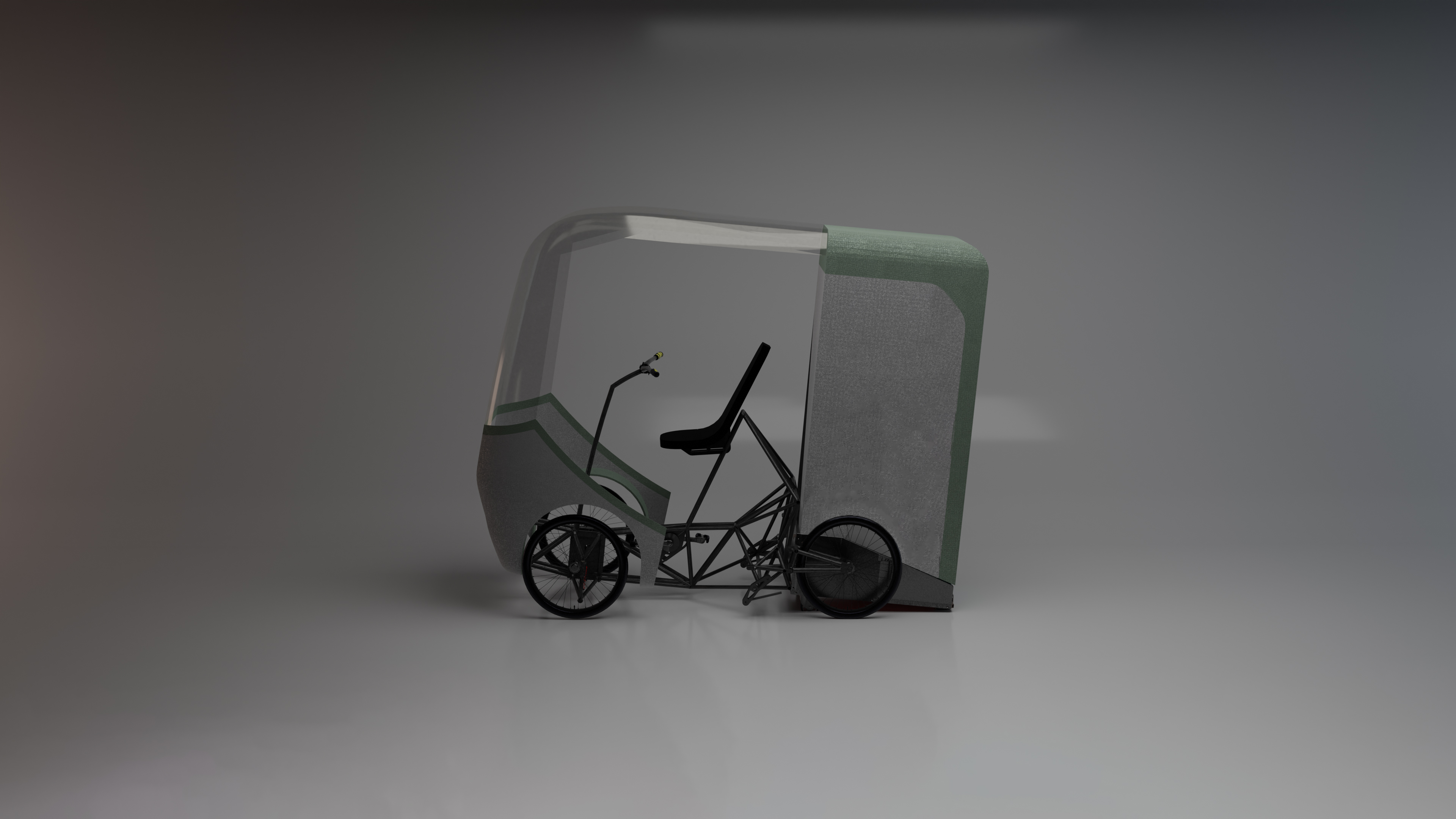
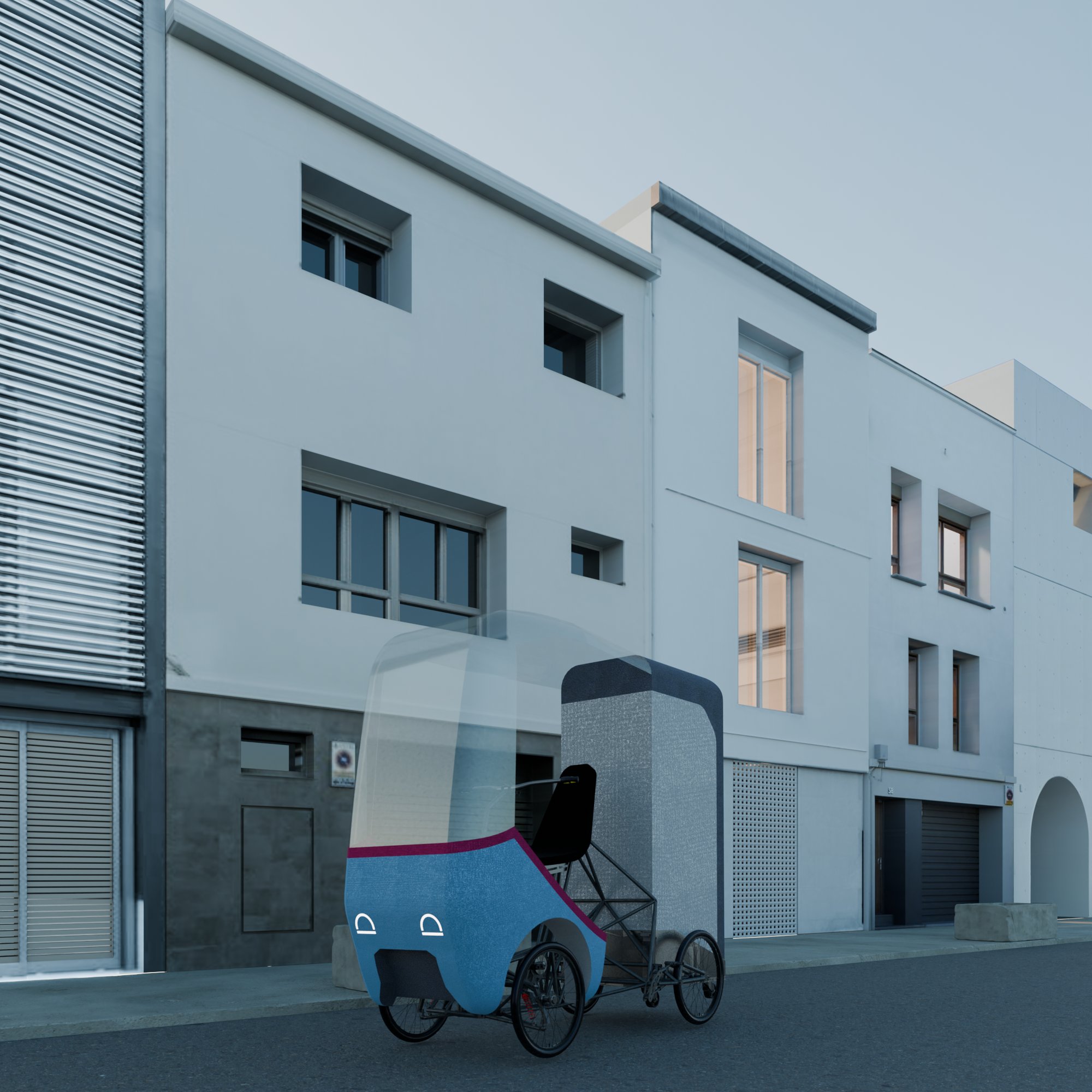
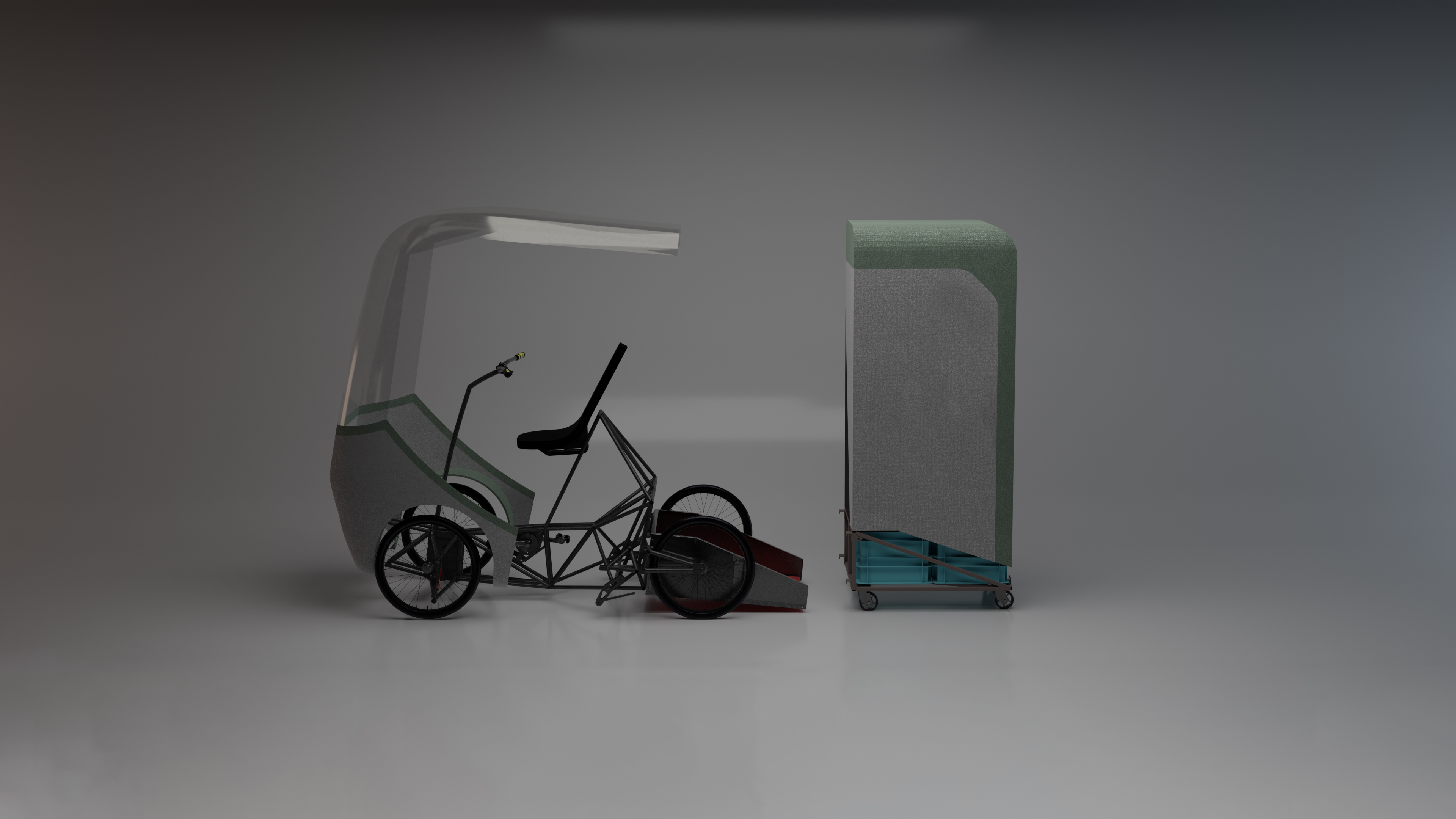
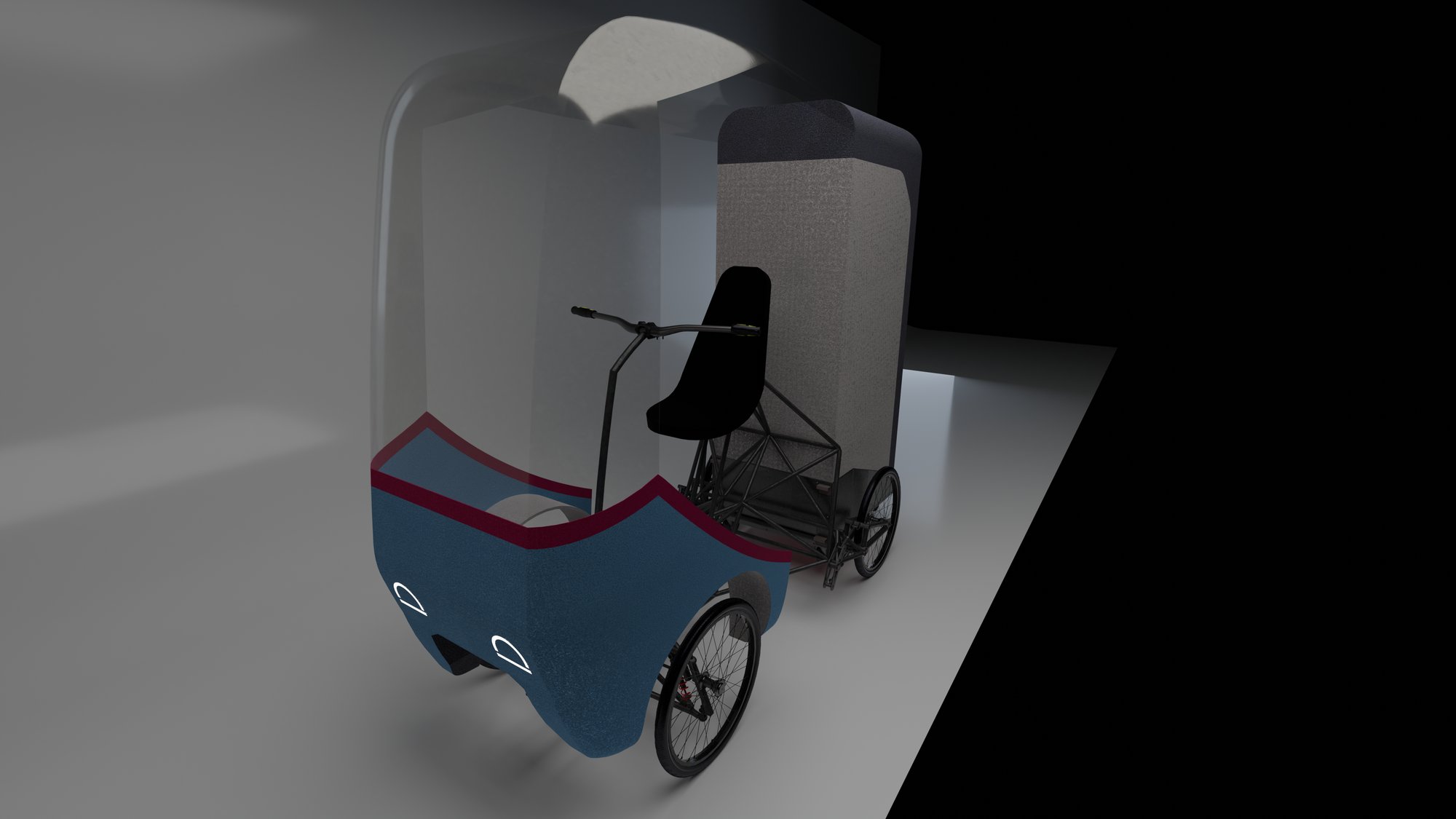
MORE Cargobike was built by a multidisciplinary student team, mechanical engineering, industrial design and automotive engineering all worked on it side by side. The renders and clip below show the finished vehicle and the detachable chassis connection, developed together with the team's automotive engineers, so the concept as a whole makes sense before the next sections zoom in on the part I actually built: the hull mold.
Process
This project ran as research first, engineering second, every material and mold decision had to survive contact with what could actually be produced, not just what looked right in CAD. Click through the four stages below.
Sustainability wasn't a requirement here, weight and strength were. Hemp composite was the greener option but not stiff enough for the loads involved. Fibreglass-epoxy won on strength-to-weight, and the team already had hands-on experience with it, which mattered under time pressure. Every gram counted against the 75 kg vehicle limit, so material choice was a budget decision as much as an engineering one.
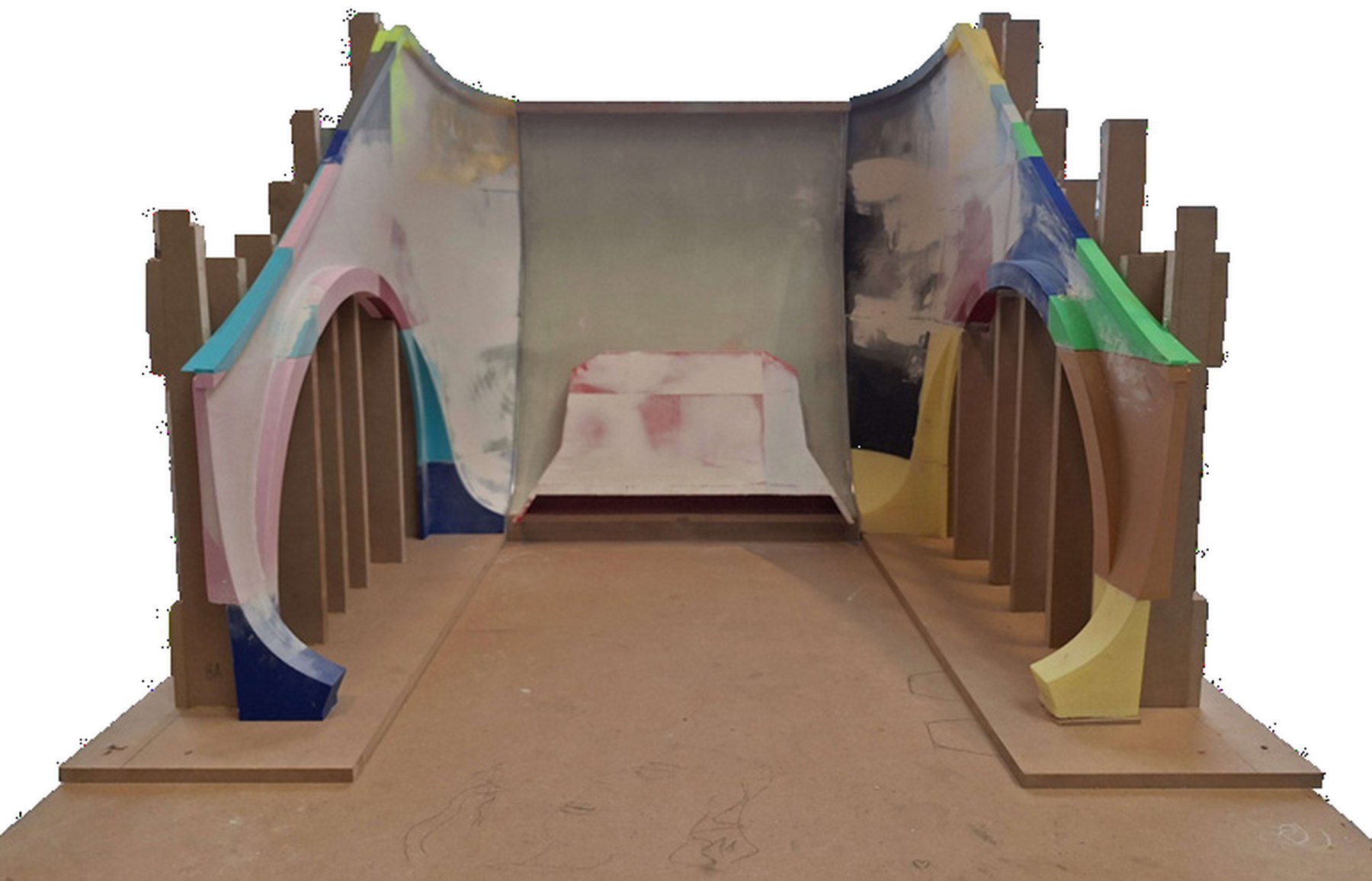
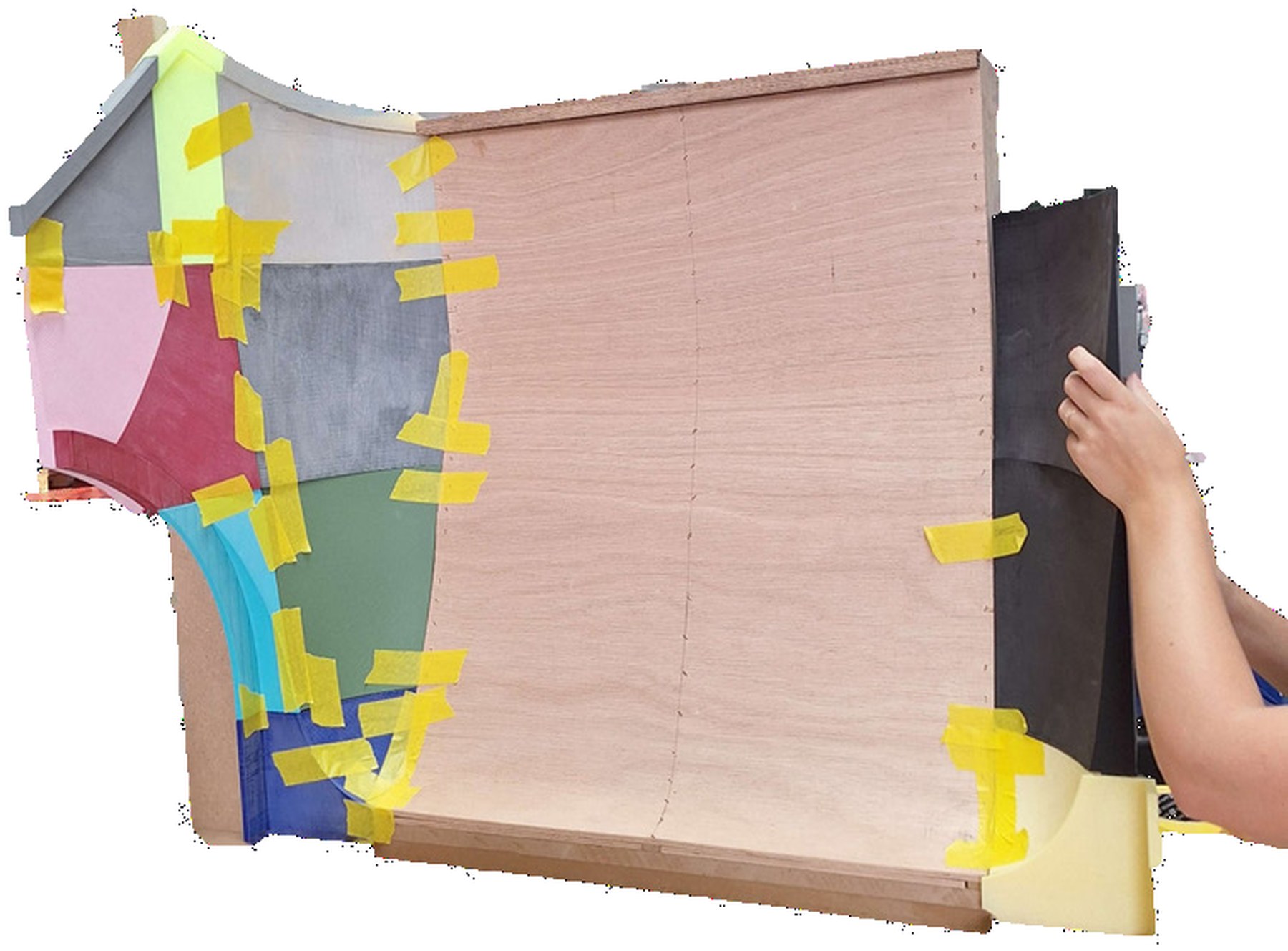
A single-curved negative mold this size, CNC-milled from foam the way a company would normally do it, costs around €6,000 to €10,000, completely out of reach for a student project. 3D printing was the affordable alternative: I split the mold into 28 printable blocks (14 per side) and had them printed across seven different printers, fellow students' machines plus the faculty's Fablab, to fit a two-week deadline. A thin outer wall with a higher infill density kept every block strong enough without blowing up print time.
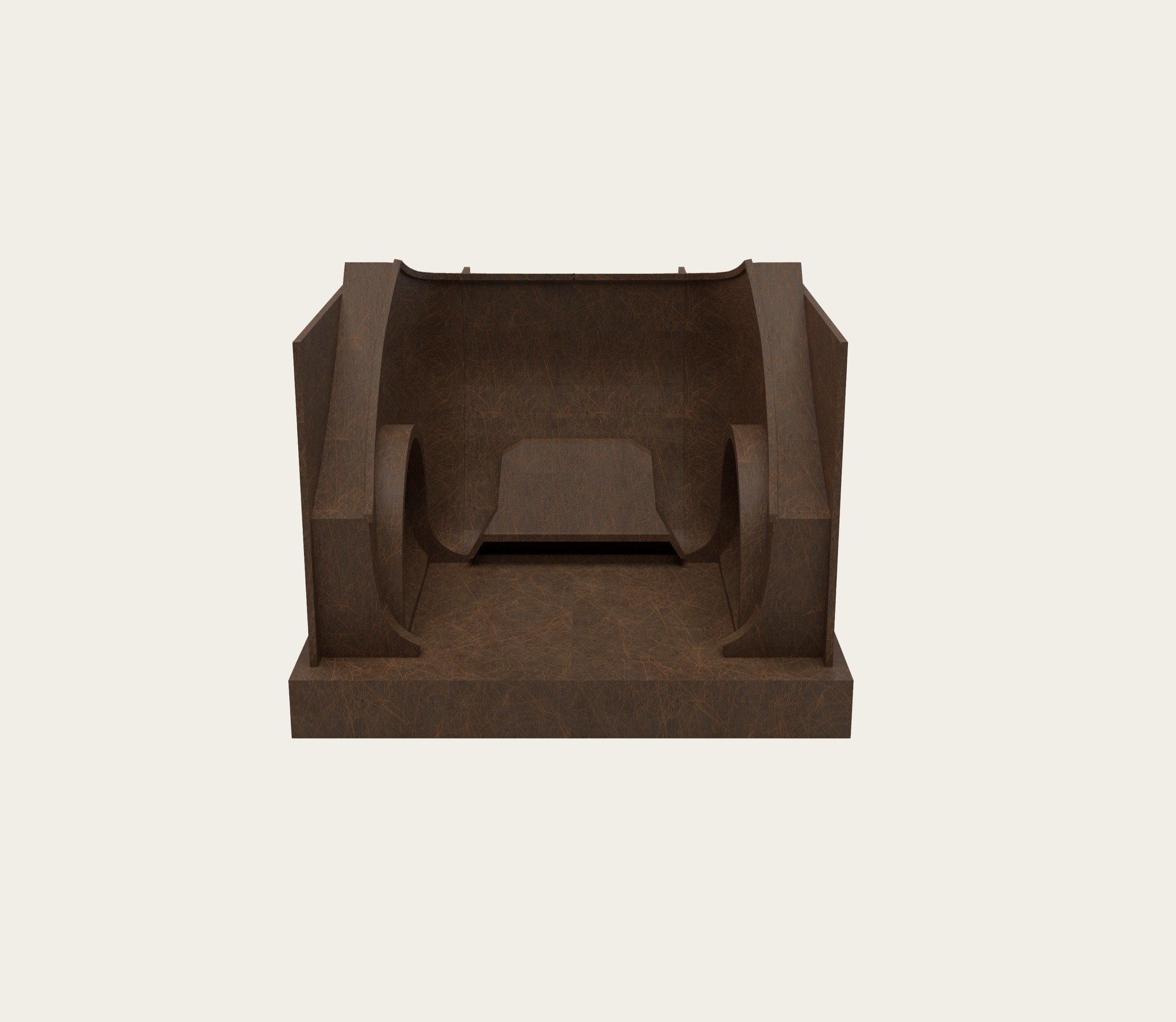
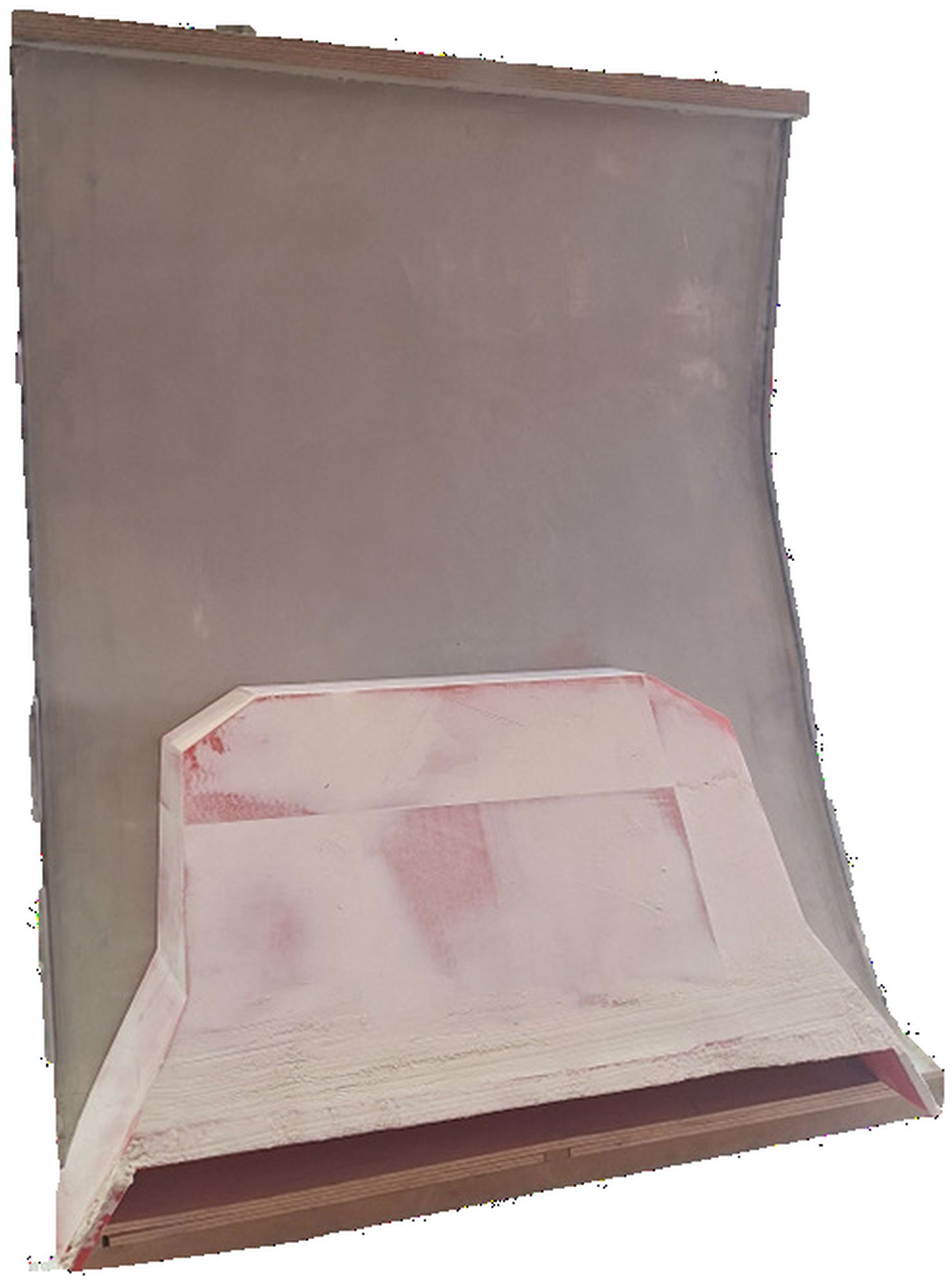
The mold's middle section is only single-curved, so printing it made no sense, it's built from wood instead: three laser-cut ribs with a bent sheet stretched over them, cheaper and faster than printing that section would ever have been. Inside, a torsion box and extra ribs keep the whole mold square, later backed with a solid panel and filled with PUR foam so the thin-walled prints can survive the pressure of vacuum-bagging without deforming.
The senior engineer confirmed what the approach was aiming for: this modular, 3D-printed mold turned out cheaper, more modular, and easier to repair than a standard CNC-foam mold, if one block ever breaks, it gets reprinted and swapped in, without remaking the whole mold. That's a genuinely useful property in an educational, repeat-prototyping environment, and it's the main reason the senior engineers were happy to take the mold forward for lamination themselves.
01, Designed backwards from the mold
Translating an organic, surface-modelled hull into a mold that could actually be built meant solving draft angles, parting lines and tolerances before the shape itself was final. Every curve had to be checked against whether it would release cleanly, the mold wasn't a step that came after design, it was part of the design.
02, Modular by necessity, not by trend
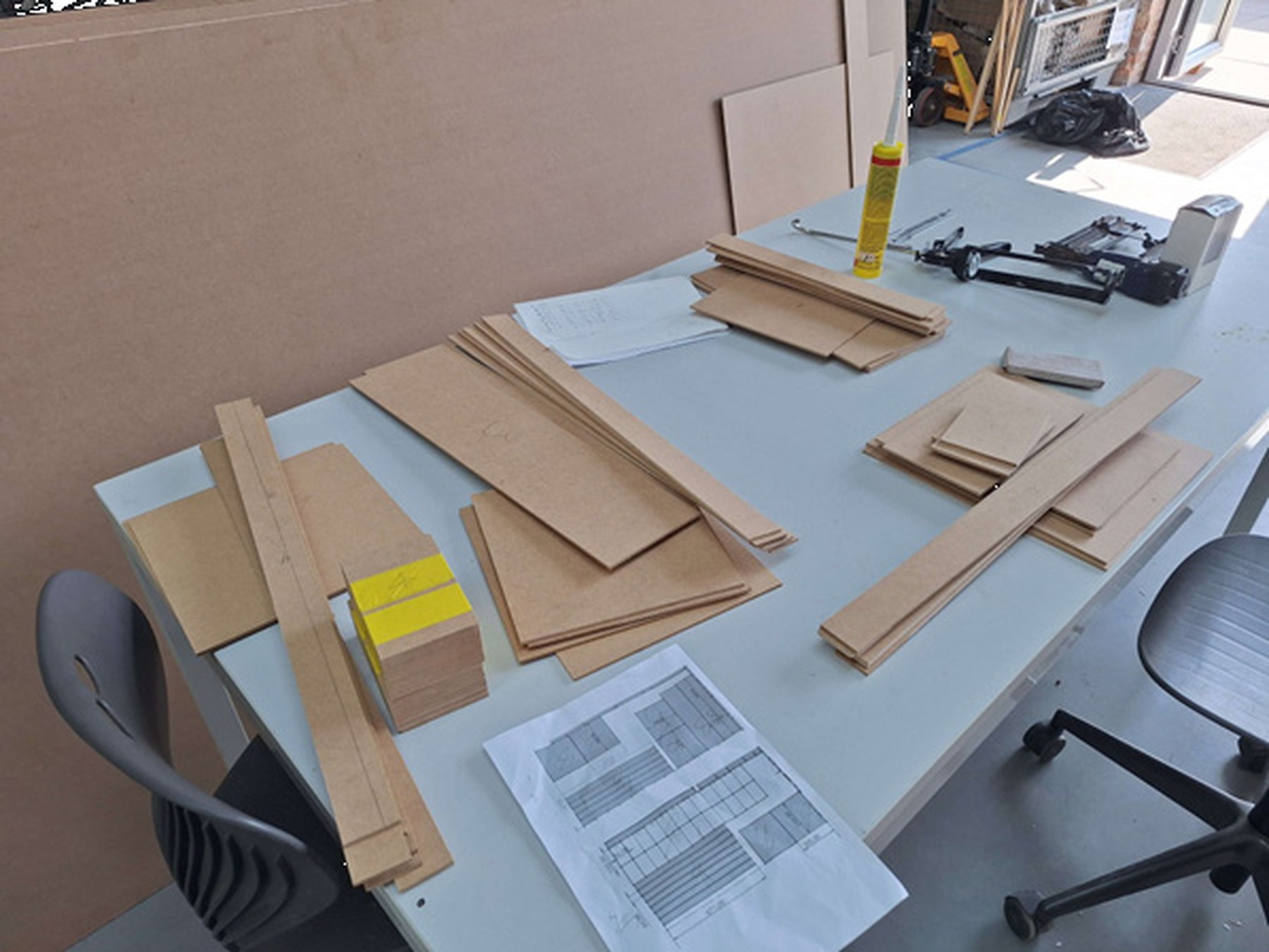
Printing the full mold in one piece wasn't realistic on time or material cost, so it's built from 28 printed segments combined with laser-cut wooden structural parts for the flat mid-panel. That hybrid keeps the mold reusable and repairable, something worth more in a student prototyping environment than a single flawless one-off would have been.
Gallery